Good Things Hitler Did Reddit
Reddit gives you the best of the internet in one place. Get a constantly updating feed of breaking news, fun stories, pics, memes, and videos just for you. Passionate about something niche? Reddit has thousands of vibrant communities with people that share your interests. Alternatively, find out what’s trending across all of Reddit on r/popular. In it, he analyzed Hitler and his philosophy, as derived from a reading of Mein Kampf, 'to foreshadow, from Hitler's own statements, some of the things he would like to accomplish.' Theoretically, Hitler himself could have been sent back in time using Die Glocke to found the Nazi Party, ensuring that Die Glocke would be built to send him back in time 13. We move from science fiction to pure conspiracy theory here, with accusations that the Nazis are somehow linked to the creation of aspartame. I saw the question “What about all the good things Hitler did?” on a T-shirt once, and yes, I found it funny. I confess, I love dark humour. I’m not sure as to exactly where my limits are. I still feel a little bad about deriving pleasure out of subject matter which is a source of evil and misery for many people (or animals).
Not everyone has the stuff to be a dictator. Being the sole leader of a totalitarian state takes intelligence, the ability to connive and persuade, and a penchant for violence and terror. The most infamous dictators in history—Adolf Hitler, Joseph Stalin, Benito Mussolini, etc.—all had unique characteristics and signature tactics that got them their dark spot in history. So how did they do it?

Hitler the orator
Hitler knew how to win over the German people at a time when they felt weakest, after the devastating results of World War I. While his scheming, his military actions, and his undeterred ego all helped him rise to power, his influence truly came from his oratory skills. Hitler was an impassioned, charismatic, and eloquent speaker who knew how to strike at the hearts of his people.
Hitler's Minister for Public Enlightenment and Propaganda, Joseph Goebbels, recognized the importance and intensity of Hitler's rhetoric in his analysis 'The Führer as a Speaker.' In this essay, Goebbels explains exactly what it was that made Hitler the best orator Germany had ever seen and how that propelled his cause to incredible ends. 'The Führer is the first person in Germany to use speech to make history,' he writes. 'As he began, it was all he had.' Before taking his place as Chancellor of Germany and Führer, Hitler was just one of many who felt deeply wounded by the diminished motherland after the signing of the Treaty of Versailles. It was his ability to transfer his feelings into compelling speech that began to win him notoriety.
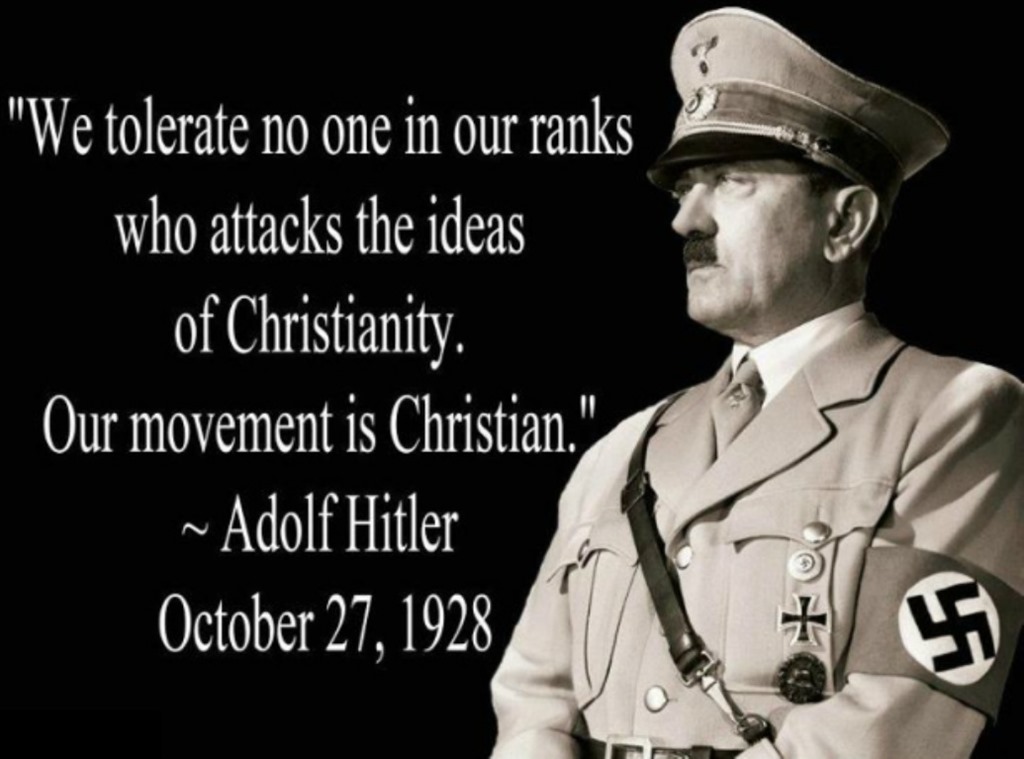
'He speaks his heart,' Goebbels says, 'and therefore reaches the hearts of those who hear him. He has the amazing gift of sensing what is in the air. He has the ability to express things so clearly, logically and directly that listeners are convinced that that's what they have always thought themselves.' Hitler exuded extreme confidence and promise at his rallies, and by the end had delivered over 5,000 speeches that invigorated the German people, gathering them together for what would be a most terrible cause.
Mussolini the journalist
Before Benito Mussolini became the dictator of fascist Italy, he was a journalist. As such, he had a great understanding of the power of the press and of the written word.
At first, he was a writer for a socialist paper, where his writing was already charged with violent rhetoric that pushed the need for revolution. After the First World War, however, Mussolini changed his political views from socialist to fascist. It was then that he started his own newspaper, Il Popolo d'Italia, that he used as his personal platform to push his fascist movement forward. It was his ability to rely on the written word and language to back up his vision for the future of Italy, in which he sought to 'organize middle-class youth, control workers harshly, and set up a tough central government to restore 'law and order.' Mussolini became the mouthpiece of revolution for his country and a violent, tyrannical leader.
Bad Things Hitler Did
Lenin and the proletariat
At first, Vladimir Lenin's ideas seemed beneficial, reasonable, and desirable to a great portion of the Russian population. A socialist, he championed the working class and sought to revolutionize Russia by putting power into the hands of the people instead of the Tsars of the time. This goal and his passion for it galvanized the public and won him their support. He spoke to and identified with the downtrodden portion of Russia and used that to his advantage.
However, Lenin, a proud and fiery individual, placed himself at the top of this movement and employed violent means to keep the state under his control. After he and his followers successfully performed a coup d'etat, he began what would become known as The Red Terror, a cruel campaign that called for the total elimination of anyone who stood to oppose him.
Stalin and propaganda
Stalin rose to power after Lenin and sought to secure his own vision of Russia. He wanted to transform what was largely a peasant state into one of grand industrialism. Stalin ended up accomplishing the task of industrialization but in the most brutal way possible. Like Lenin, he killed anyone who stood in his path, including civilian farmers who had their land taken away and made property of the state. Unlike Lenin, he was not initially sympathetic or coy about his intentions. He was forthright about his brutality and immediately used violent means to secure his ends.
While he made his ability to use terror and violence known, he did understand the value of propaganda. He built a cult of personality, renaming cities after himself and revising textbooks to put himself in their center. He even stuck his name in the national anthem. Though his reign was seen as terrible by his own people as it was happening, Stalin's vice grip on his country held for many years as he put himself in such high esteem through propaganda tactics. He certainly looked like a man that could not be taken down.
Hunting Hitler Reddit
Mao and his strength
Chairman Mao Zedong was one of the world's absolute worst leaders. He plunged the country into poverty and starvation, and his polices killed millions. However, for some strange reason, millions of Chinese people today still actively worship Mao. Given the historical context, outright demonstrations of love for the deceased dictator appear unbelievable. But it's not what he did that sticks with the Chinese people, but how he did it.
A CNN article written back in 2012 tries to explain this seemingly paradoxical situation. 'To many people in China, Mao Zedong is the country's eternal father,' it says. 'No Mao, no China' is the mantra often repeated by his supporters.' A display of strength in a time of weakness is absolutely necessary for a despot. Even though in his own time he caused absolute horror and chaos, he is now remembered for his strength and resolute character by many Chinese citizens who feel their country currently lacks such qualities.
Saddam and his double life
Saddam Hussein was as two-faced as they come. When he first came to power in 1968 as deputy to President Ahmed Hassan al-Bakr as the result of a coup, he made it a priority to put his best foot forward. To present himself as an effective and worthy political figure, he made motions to modernize and improve Iraq. He reformed everything from health care to education to the way the country did business. What a great guy, right?
Well, at the same time as he was making all of this progressive moves in the public forum, he was setting himself up as the ruthless dictator we know him as today. He built the nation's first chemical weapons program, set up a private army to guard against coups, and attacked enemies with extreme violence, turning to rape, torture, and murder.
It wasn't long before he dropped his nice guy facade entirely and showed the world just how brutal he could be. But we must remember, it was because of his initial sneaky, calculated, and 'positive' approach that he wormed his way into one of the worst dictatorships the modern world has seen.
Kim Jong Il and his showmanship
The recent figures of the Kim dynasty in North Korea are known as total laughingstocks worldwide, but they're also simultaneously known to be incredibly dangerous. So how do we resolve this conundrum? What makes figures like Kim Jong Il so unnerving is that they're highly unpredictable and cruel while at the same time being beloved by their countrymen. For example, Kim Jong Il's reign was marked by a lot of pomp and circumstance. His arrival to any given place was treated as nothing less than a total celebration. It all boils down to the culture's core values of nationalism, filial respect, and utopia.
But while parades and displays of appreciation for their leader were being put on, Kim Jong Il was starving his nation and having people killed left and right. 'Called the 'Dear Leader' by his people,' the New York Times writes, 'Kim Jong-il presided with an iron hand over a country he kept on the edge of starvation and collapse, fostering perhaps the last personality cult in the Communist world even as he banished citizens deemed disloyal to gulags or sent assassins after defectors.' It's because the Kim dynasty is able to keep their civilians in awe and worship that they can get away with so many horrors. It's all about presentation.
Five decades of Fidel Castro
Cuban dictator Fidel Castro died just last year, but his almost 50-year reign will never be forgotten. It was one that came to fruition after years of plotting, rioting, and unsuccessful coups. When he and his guerrilla military forces finally overturned the existing government in 1959, it began what would be a total shift to communism, a terrible relationship with the United States, and the removal of Cubans' civil liberties that ended in mass imprisonments, exiles, and deaths.
However, Castro was not a man without his good deeds. During his rule, approximately 10,000 new schools opened, literacy increased to 98 percent, and a universal health care system was set up. But some of his 'good deeds' weren't really good for the people after all. Take, for instance, his move to decrease the amount of land one could hold and the ban on foreign ownership of these lands. It seemed to aim to put some power back into the hands of farmers and increase their independence, but as a result of these measures, their land went directly to the state, so they had no say in their land development or income. Castro also made efforts to unite African and Latin American countries, but by spreading militant communism instead of ideas of peace.
In this way, Castro was a perplexing figure who won favor with some and hatred from others. He sought to improve his and other neighboring countries, but through radical, violent and harsh means. Every beneficial idea on the surface was extreme or detrimental at its core. This dictator was very adept at dressing up his schemes to make them look better than they were. Maybe this is why he was never deposed and maintained such a long hold on his nation until he voluntarily handed the reigns to his younger brother, Rául, in 2008.
Robert Mugabe: democracy to dictatorship
In 1980, Robert Mugabe was democratically elected to be the president of Zimbabwe. When a ruler is elected democratically, it's usually difficult to imagine the word dictator next to their name just a few years later. What makes that concept even more difficult to believe is Mugabe has been reelected several times and still maintains his station as ruler of his country. However, he has edged himself into the category of tyrant with his policies, both attempted and actualized, and with violent war efforts that have killed tens of thousands.
In the year 2000, for instance, Mugabe tried to expand his presidential power to absolute power by altering the Zimbabwean constitution. He also famously had 20,000–30,000 Ndebele people killed as part of a campaign to destroy any remaining opposition to Zimbabwean independence. As The Independent puts it, 'He interfered in the economy, and, when the money ran out, tried to pay for his rash promises to 'war veterans' (some born after the liberation struggle) by stealing white farmers' land.' All of these facts certainly don't seem like the kind of behavior one would expect from a democratic president, but these events did indeed happen. As a result, Mugabe's rule serves to point out perhaps one of the most dangerous characteristics of a dictator—their ability to turn democratic power into totalitarian power and abuse their own and other countries for personal purposes.
Adolf Hitler was born on April 20, 1889 in Braunau am Inn, Austria and spent his childhood there, nicknamed as “Adi”. He dreamed of becoming an artist but did not pass the entrance exam in Vienna. However, he became a venerated soldier in World War I and eventually went into politics. He was responsible for starting World War II and for killing more than 11 million people during the Holocaust. However, his leadership helped Germany to recover and also led to some positive campaigns and the development of technologies that have helped modern society thrive today. Despite the scars that the world has yet to heal, there are some lesser evils related to this man highlighted as follows:
10. Olympic Torch Relay
Hitler inaugurated the 1936 Summer Olympics in Berlin that was marked with a lot of controversy. The torch relay was one of the ways which helped define the modern Olympic experience as we know it today. The ancient Greeks had run relay races that involved flames as part of their worship to the Gods, but there had been no such symbolism in the modern Games.In the lead-up to the Games, the Nazi Propaganda Ministry supported a relay of the Olympic flame. This would not only provide spectacular footage for Olympia (the 1938 film) but also for significant political and public relations benefit.
9. Blow-up dolls
Hitler reportedly was the first person to approve blow-up dolls for army men. The project was meant to “counterbalance” the sexual desires of German troops and was considered “more secret than top secret”. Media reports had quoted Hitler as saying, “It is our duty to prevent soldiers from risking their health for the sake of a quick adventure.” Later, the plan of using sex dolls for the troops was dismissed in 1942. Many German soldiers refused to carry those blow-up dolls in their back-packs to avoid embarrassment in case they were captured by the British.
8. The outfits
The founders of Adidas were the brothers Adolf and Rudolf Dassler. Jesse Owens of the Summer 1936 Olympic Games, wore the new running shoes with spikes which they had designed. Following Owens’s haul of four gold medals, his success cemented their reputation. Eventually, the two split up over their dispute relating to the Nazi Party. It seemed Rudolph was more pro-Nazi than his brother. He later went on to create the company “Ruda” which was renamed as “Puma”. The two companies exist successfully to this day.
7. Film technology
The interest that Adolf Hitler took in film was not only the result of a personal fascination. Metropolis (Fritz Lang, 1927) and Triumph des Willens (Leni Riefenstahl, 1934), two important German films separated by almost a decade, reflect very different feelings of nationalism. These controversial films were created as a means to propogate the Nazi party further. Leni Riefenstahlwas heavily influenced by The Third Reich. She used an astounding thirty film cameras and over one hundred technicians to produce the two hour film. Since this film had an unlimited budget, the latest technologies were used. Cranes and track-rail filming were used, techniques still used today to make a smooth ‘traveling’ effect. This led to pioneering techniques of camera movement and editing that have influenced many later films.
6. Winterhilfswerk of the German People (WHW)
After Hitler was appointed Chancellor, the “Winter Help Work—WHW” was started. In a speech he explained, “This great campaign against hunger and cold is governed by this principle: We have broken the international solidarity of the proletariat. We want to build the living national solidarity of the German people!” It was the official Nazi-Party winter relief charity. Welfare programs were important as they made recipients more open to propaganda and created support. Money was collected in many ways. One of the most obvious ways was using the Hitler Youth children to collect coins. At first this was on street corners and later, the children began going door to door. Badges were another means to promote this program. The Nazi’s in 1933-34 claimed that WHW beneficiaries exceeded 16.6 million persons. This would mean that one out of every four Germans received WHW assistance.
5. Animal protection
After the suicide of his niece, Hitler witnessed the autopsy and became so disgusted that he renounced meat forever. Today, it is acknowledged by historians that he followed a vegetarian diet during the war. At social occasions, he sometimes gave graphic descriptions of how animals were slaughtered to discourage the guests from eating meat. He was an avid antivivisectionist like many other members of the Nazi party. In 1934, a national hunting law was passed known as “The Reich Hunting Law”. It regulated proper hunting seasons and the number of animals to be killed per year. It also supported the bill for animal conservation education in primary, secondary and college levels. Another law was passed in 1935, called “Reich Nature Protection Act” which was for protection of several native species such as the Eurasian Lynx. These hunting and conversations laws are used as legal guidelines in Europe even today.
4. Stop smoking!
Adolf Hitler was a heavy smoker in his early life—he used to smoke 25 to 40 cigarettes daily—but gave up the habit, concluding that it was a waste of money. He promised to end the use of tobacco in the military after the end of the war and personally encouraged close friends not to smoke. The ones who quit the habit were rewarded as well. His personal distaste for tobacco was one of the catalysts behind the anti-smoking campaign on a nationwide level. The National Socialist leadership condemned smoking and several of them openly criticized tobacco consumption. Smoking was banned from government offices, civic transport, university campuses, rest homes, post offices, many restaurants and bars, hospital grounds and workplaces. Research on smoking and its effects on health thrived as well. They limited cigarette rations in the Wehrmacht, organized medical lectures for soldiers, and raised the tobacco tax. Earlier, such anti-tobacco campaigns had been tried out in Europe but none had been implemented on a scale as under the reign of Hitler.
Good Things Adolf Hitler Did

3. Rocket technology
Werner von Braun, developed the V-2 as director of Hitler’s research station at Peenemunde. He was was a part of the Nazi Party and commissioned Schutzstaffel Officer. After the war, Britain, the US and the Soviet Union all gained access to the V-2’s technical designs and liaised with the German scientists responsible for developing it. Braun eventually got captured by the allies and later became a naturalized citizen in USA and went on to work with NASA, furthering pioneering in rocket science that paved the way for destruction and creation as well. His best achievement there was undoubtedly the development of the Saturn V booster rocket, that helped man to finally touch the moon, in July 1969.
2. Gehen Auf de Autobahns! (Go to the highway)
These freeways were called “autobahns” in Germany. Did you know that Hitler was actually involved in furthering the construction of these freeways when he took over as Chancellor? Plans for the autobahn date to the 1920’s. Their construction began in September 1933. Eventually by December 1941, they had completed 2,400 miles (3,860 km), with another 1,550 miles (2,500 km) under construction. The highway network enhanced Germany’s ability to fight on two fronts-Europe in the west, the Soviet Union in the east during World War II. This was eventually used in America in 1940’s where car congestion’s had begun to occur. American president Eisenhower explained years later, “after seeing the autobahns of modern Germany and knowing the asset those highways were to the Germans, I decided, as President, to put an emphasis on this kind of road building. The old [1919] convoy had started me thinking about good, two-lane highways, but Germany had made me see the wisdom of broader ribbons across the land.”. The rest, as we know, is history.
Good Things Hitler Did Reddit Make
1. The people’s car
Did Hitler Do Any Good
Hitler proposed to build a cheap car that almost anyone could afford. He gave it the name “KdF Wagen,”. KdF was the abbreviation for “Kraft durch Freude” (Strength through Joy), a subsidiary of the German Labor Front. He advised the designer that it should resemble a beetle. In 1934, Porsche submitted the best design — and was awarded the contract. At the 1935 German auto show, Hitler was full of praise for Porsche. He wanted to call the factory the “Porsche Plant,” but Ferdinand Porsche was opposed to the idea. Instead, it became the Volkswagen Plant instead. The car was a huge success (it was made available to citizens of the Third Reich through a savings scheme at 990 Reichsmark, about the price of a small motorcycle), but toward the end of the war resources were low and public availability declined. However, till this day, the legacy of Volkswagen continues to thrive all over the world with its great design and performance.