What Is Full Screen Hardware Acceleration
- Windows 10 users received an update in 2020 that added optional hardware-accelerated GPU scheduling. The goal of this new feature is to improve performance for modern graphics cards, but its effects are still the focus of in-depth testing on the parts of users who have it enabled and Microsoft itself.
- Defining Hardware Acceleration Hardware acceleration is a term used to describe tasks being offloaded to devices and hardware which specialize in it. By default in most computers and applications the CPU is taxed, first and foremost, before other pieces of hardware are.
Hardware acceleration is a term commonly thrown around in PC circles. Chances are you’ve heard it being used but might not exactly know what it means. It is one of those labels that can be confusing because it overlaps with other terms like graphics card and video card rendering. It is a setting on your PC that both Windows and certain applications make use of to speed up the computing process when enabled. We shall discuss just what hardware acceleration is and whether you need it. Also, we will show you how to turn on hardware acceleration on your Windows 10 computer.
According to Hackborn, what we will see in Android 4.0 is “full” hardware acceleration. All UI elements in windows, and third-party apps will have access to the GPU for rendering. Android 3.0 had. Hardware acceleration is a tool anyone can take great advantage of. By using it, you can allow your PC's hardware to handle tasks faster than software algorithms. Your hardware generally performs faster, meaning that you'll get much faster performance. How to set graphics hardware acceleration back. Windows uses software called 'video drivers' to communicate with your computer's screen. If the video driver or its hardware aren't perfect, it can cause display problems, especially with software like PowerPoint, which really gives the display a good workout.
What is Hardware Acceleration in Windows 10?
Ordinarily, when an application is doing a task, it uses the standard CPU on your PC. If the work is heavy, it naturally requires more power beyond what the CPU might be able to provide and this would in turn affect performance. With hardware acceleration, the application uses dedicated hardware components on your PC to carry out the work more speedily and efficiently. The point of hardware acceleration is to boost either speed or performance, but usually both.
The sound and video cards on your Windows 10 PC are examples of dedicated hardware utilized by the system to boost output. When a task that involves rendering graphics is in play, for example, the CPU on your PC offloads some of the work to your video card, making the process much faster, and the resultant graphics display will also be of a higher quality. Of course, how high the quality is depends on the specs of your graphics card.
Most computers nowadays come with a dedicated GPU alongside the main CPU. This GPU naturally takes over demanding computer operations like playing high-definition games or running complex video processing. When applications such as Chrome require more power to fully display everything on a page or frame, they force your PC to run in hardware accelerated mode.
Most modern computers come with hardware acceleration turned on by default, while on a few it has to be manually enabled. In the same vein, there is a setting in certain applications to trigger or disable hardware acceleration. Most of the time you don’t have to worry about this, but there are situations where you might want to know whether hardware acceleration, or the lack thereof, is what is causing glitches on your computer.
Although most modern browsing, display and gaming apps are designed to work with hardware acceleration, it doesn’t mean that they can use it. Your system has to support the feature before those apps can take advantage. This means there must be either an integrated GPU or a dedicated one on your Windows computer. If neither is present, there won’t be any accelerator for your apps to use. You can easily check whether your PC supports hardware acceleration. You can go to you NVIDIA (or AMD) control panel (if you have a dedicated GPU) and check the configuration settings for the hardware rendering option. For a GPU integrated with the main CPU, just follow these steps:
- Press Windows Key + X and choose Control Panel from the list of options.
- Go to Appearance and Personalization > Adjust screen resolution.
- On the Screen Resolution screen, click on Advanced settings.
- Check if there is a Troubleshoot tab in the Display Adapter Settings window.
If no such tab exists, it means your Windows PC isn’t capable of hardware acceleration.
Full Screen Hardware Acceleration
Do I need hardware acceleration?
Now we come to the million-dollar question: Should you enable hardware acceleration on your computer? There are times you launch a game or app and a window pops up asking you to tick a box if you want hardware acceleration enabled. The short answer is that you should. The benefits are huge for your system and also far outweigh any minus of the feature.
For gamers, hardware acceleration is a must, unless you’re content to be stuck with games from the pre-HD era. With hardware acceleration, the animations will become smooth as snow and you will also get higher framerates. Not to mention 3D rendering becomes a breeze and game effects become clearer and more lifelike. In short, without hardware acceleration, any modern game won’t run in optimum conditions—if it runs at all.
Visited any popular site lately? You must have noticed the huge number of media clips and plenty of graphics-laden content on the pages. Your browser uses hardware acceleration to render the content faster and more efficiently. Otherwise, you’re likely to get slow loading times and poorly displayed pages.
For those who like to multitask, hardware acceleration is a must. If you’re working with several intensive applications at the same time, hardware acceleration ensures the workload is shared between your CPU and GPU. It is good old division of labour in practice.
Therefore, unless you’re making a trip to an uninhabited wasteland devoid of electricity and want to conserve your battery, you should always enable hardware acceleration on your PC. Most modern video cards/GPUs are designed to be energy-efficient anyway. Of course, turning on hardware acceleration will give off a bit more heat, but it is nothing that your cooling system can’t handle.
How to turn off hardware acceleration in Windows 10?
With that said, there are some special situations where it makes sense to disable hardware acceleration. Your main CPU might be capable of handling the most demanding of applications by itself. You might want to turn it off temporarily so as to conserve some juice. Whatever your reason, here is how to turn off the feature systemwide in Windows 10 (version 1803 and later), after which your computer will operate in software rendering mode:
- Right-click an empty space on your desktop and click on Display settings.
- Scroll down the Display settings options page to Advanced display settings and open it.
- In the next window, click Display adapter properties for display 1.
- The graphics properties window will open. Choose the Troubleshoot tab.
- Click Change Settings.
- In the Display Adapter Troubleshooter bar, move the Hardware acceleration pointer to the left to disable hardware acceleration on your PC.
- Click OK to save your changes and exit.
What Is Default Full Screen Hardware Acceleration
If the Change Settings option in step 4 is greyed out, you can try to enable it in Windows registry. Navigate to HKEY_CURRENT_USERSOFTWAREMicrosoft. Find the graphics card registry entry and change DWORD DisableHWAcceleration from 0 to 1. This method only works if your PC supports hardware acceleration.
Many users have reported that the Change Settings option remains greyed out no matter what they do. Others have complained of being unable to enjoy the benefits of hardware acceleration even with a dedicated GPU installed. Both problems are primarily due to the absence of graphics card drivers or corrupted/outdated drivers. If you’re in the same boat, simply visit your graphic card manufacturer’s website and download the latest drivers for your hardware. Install them on your system, and everything should work fine.
Resolve PC Issues with Driver Updater
Unstable PC performance is often caused by outdated or corrupt drivers. Auslogics Driver Updater diagnoses driver issues and lets you update old drivers all at once or one at a time to get your PC running smoother
Naturally, nothing on Windows is as simple as it seems. It is not easy for non-experienced hands to easily decipher the precise make and model of their hardware, which means you can install the wrong stuff, causing further harm to your PC. If you want peace of mind and 100% guarantee of installing the exact drivers that your graphics card requires, just download Auslogics Driver Updater. It will scan your computer for missing, corrupted and expired drivers and search for their up-to-date, manufacturer-approved replacements. Once you have allowed it to download and install the latest drivers, just restart your computer and enjoy your working video cards again.
If this article has helped you in any way, please let us know in the comments.
Contents:
Hardware Acceleration Overview
In some cases, once you found that Windows 10 screen flickers or goes into black screen suddenly, there is much need to consider something about hardware acceleration on Windows 7, 8, and 10. And if you are experiencing fuzzy or blurry videos or games in browsers, you would better try to disabling hardware acceleration on Chrome, Firefox, and Microsoft Edge.
And when seen from the screenshot below, your Hardware acceleration is set as Full, which means that hardware acceleration is enabled by default. In this way, you need to turn off this function to see if it works for the flashing monitors or any other image or video related issues.
But most of you may have no clue about what the hardware acceleration does on Windows 10, not to mention how to disable it to solve hardware acceleration issues.
Here this post will show you how to turn hardware acceleration off on Windows 7, 8, 10 so as to improve computer’s performance.
What is Hardware Acceleration?
For the sake of your understanding, hardware acceleration is designed to dispatch some tasks of CPU to GPU, thus relieving the burden of CPU. In doing so, PC performance will be greatly enhanced since the CPU can process faster. That can be a way to make you watch more smooth and steady videos.
In detail, now people tend to simply regard hardware acceleration as graphics acceleration since it often functions for a graphics card or sometimes sound card.
Of course, you would better leave hardware acceleration turned on for better graphics performance, but if there is anything wrong with the video card, for instance, application has been blocked from accessing graphics hardware, you should attempt to turn Windows 10 hardware graphics acceleration off immediately.
How to Disable Hardware Acceleration on Windows 7, 8, and 10?
Depending on your Windows system, you are supposed to refer to different steps to disable hardware acceleration.
Normally, it is feasible to increase or reduce hardware acceleration on Windows 7, 8. Whereas you can only choose to enable or disable it on Windows 10 earlier versions.
So if you are determined to change the graphics performance, let’s get started to configure hardware acceleration. This post aims to close the hardware acceleration function to fix various display problems.
Part 1: Disable Hardware Acceleration on Windows 7, 8
As suggested, on Windows 7 and 8, you can either disable graphics acceleration by turning it to None or decrease its value.
If you have any graphics card errors, besides updating drivers, disabling hardware acceleration might also help.
1. Right click the Desktop blank space and then select Personalize from the right-click menu.
2. In Control Panel Display, hit Change display settings.
3. Click Advanced settings and then OK to move on.
4. Under Troubleshoot, choose to Change settings.
5. Then in Display Adapter Troubleshooter, turn off Windows 7 hardware acceleration by turning the slider to the left side where None shows.
Here as long as Hardware Acceleration is not greyed out and unavailable, if you wish Windows 7, 8 hardware acceleration reduce, you should try to move to the left until a value suits you rather than None.
The moment you restarted your PC, you will have successfully disabled hardware acceleration on Windows 7, 8.
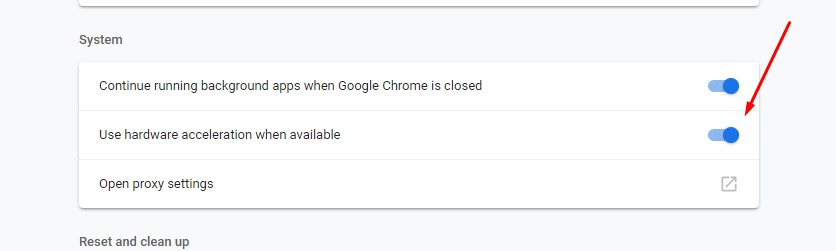
After that, in a large sense, you won’t encounter graphics errors, but if you are still experiencing fuzzy or blurry videos or games in browsers, you would better try to disabling hardware acceleration on Chrome, Firefox, and Microsoft Edge.
Part 2: Turn off Hardware Acceleration on Windows 10
Normally, you can’t increase or decrease hardware acceleration on Windows 10, what you can do is to disable hardware acceleration.
And in normal cases, Windows 10 hardware acceleration is turned on automatically by default, but you can check it using DirectX Diagnostic tool.
1. Search dxdiag in the box to open DirectX Diagnostic tool.
2. In DirectX Diagnostic Tool, under the Display tab, you can see the hardware acceleration has been enabled.
As you can see above, the DirectDraw, Direct3D, and AGP Texture Acceleration are enabled. It implies that Windows 10 hardware acceleration has been activated as well.
If you would rather hardware acceleration on Windows 10 disabled, just go ahead.
Here things go special with Windows 10 as it has been updated at intervals. In earlier Windows 10 versions, you are able to turn off hardware acceleration as you wish. But with the updates of Windows 10, the graphics card manufacturers have integrated the function of hardware graphics acceleration.
In such cases, it makes sense to first check whether or not your graphics card support hardware acceleration since there is no such functionality in recent updates, like Windows 10 1803.
For Earlier Windows 10 Versions:
Go to Start > Settings > System > Display > Advanced graphics settings > Display adapter properties.
Then you will see the Display adapter properties as that in Windows 7. And you can try to do as Part 1 to disable Windows 10 hardware acceleration under Troubleshoot tab.
For Windows 10 Late Versions:
Since you are unable to find Windows 10 hardware acceleration as it is removed from the system but embedded into your graphics card, such as NVIDIA, AMD, Intel graphics card. Hence, you can navigate to the graphics card control panel to disable the hardware acceleration.
For your reference, it will show you how to turn Windows 10 graphics acceleration in the NVIDIA Control Panel.
1. Right click Desktop blank space and then choose NVIDIA Control Panel from the list.
2. In NVIDIA Control Panel, go to 3D settings > Configure Surround, PhysX and then set CPU as the Processor rather than Auto-select or NVIDIA GeForce GTX 750 Ti.
That will let CPU to run tasks and disable NVIDIA acceleration on Windows 10.
Similarly, you are able to make use of the same way to configure the hardware acceleration settings for AMD, Intel HD graphics cards.
Here if you hope to turn off graphics acceleration to fix video card issues, you can also update the NVIDIA driver, Intel, or AMD driver for Windows 10.
Nevertheless, according to many users, in the process of turning off Windows 10, 8, 7 hardware graphics acceleration, you have met the grayed out hardware acceleration, which makes you fail to switch off this option.
So if you are incapable of removing hardware acceleration on Windows 10, move on to finish it in Registry Editor.
How to Fix Hardware Acceleration Greyed out on Windows 10?
Either there is no hardware acceleration on Windows 10 1803 and later or hardware acceleration is unavailable on Windows 7, 8, you can just turn to Registry Editor to disable it.
Even if the DisableHWAcceleration value does not exist in Registry, you can also add one and make it turn off Windows 10 hardware acceleration.
But before doing that, you must back up your registries in case of any data loss, which is why you are suggested to try this way in the final place.
1. Hit Windows + R and then input regedit in the box.
2. In Registry Editor, navigate to HKEY_CURRENT_USERSOFTWAREMicrosoftGraphics.
3. Under Avalon.Graphics, on the right pane, check if there is a key named DisableHWAcceleration.
If there isn’t, on the right side, right click the blank space to create a New DW0RD (32-bit) Value and name it DisableHWAcceleration.
4. Right click the newly added value DisableHWAcceleration to Modify it.
5. Change DisableHWAcceleraion from 0 to 1 to disable Windows 10 hardware acceleration.
Reboot Windows 10 and then you will find the flickering or black screen disappeared due to the disabled hardware acceleration.
In this way, you can not only solve hardware acceleration greyed out issue on Windows 10 but also turn graphics acceleration off from registry editor.
In short, assisted by this tutorial, you are able to master the methods to turn hardware acceleration off on Windows 7, 8, and 10. And even if it is not available, you can also ask the registry editor for help.
Related Articles: